I am a theater fanatic. When I was studying my masters degree at LSE many many years ago, I always have a show or two included as part of my monthly budget. In the region where I live, shows are far few and far between that when I get the chance to travel to the New York or London, I made sure I include as part of my itinerary, watching a play or musical regardless of the time I spend in the city.
I travelled to London in July this year. There were no carefully booked tickets, no elaborate cultural itinerary, and certainly no plan to revisit some of the biggest musical stories ever staged. But London theatre rewards spontaneity—particularly if you happen to pass a box office at the right moment, notice a discounted ticket, and decide that the evening can wait.
First Stop: Moulin Rouge
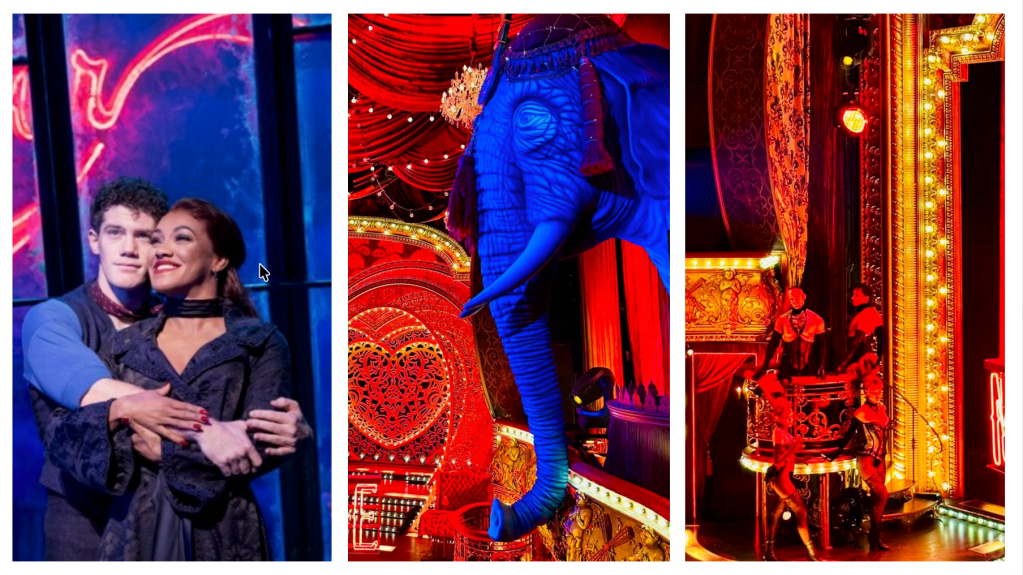
There were absolutely no plans to watch a musical that night.
But I happened to pass by Moulin Rouge! The Musical, saw that discounted tickets were available, and went in. Sometimes that is all the persuasion one needs in London.
The original Baz Luhrmann film remains difficult to beat. Its feverish, over-the-top visual language, its rapid-fire pop-medley soundtrack, and its romantic excess belong so completely to the cinema. And then there is the gleeful innocence of Ewan McGregor’s Christian, the luminous beauty of Nicole Kidman’s Satine, and the chemistry between them that made the film such a defining movie musical for many like me.
But the singing in Moulin Rouge! was phenomenal.
The production knows what it is: loud, colourful, romantic, camp, and relentlessly entertaining. It does not hold back. The familiar songs arrive with dramatic force, the audience responds instantly, and the performers give everything. Even if the stage version cannot replicate every bit of Baz Luhrmann’s cinematic frenzy, it offers something the film cannot: the electricity of voices filling a room in real time.
Second Stop: Grace Pervades
The next stop was altogether different: quieter, more literary, and anchored by one of the great actors of his generation.
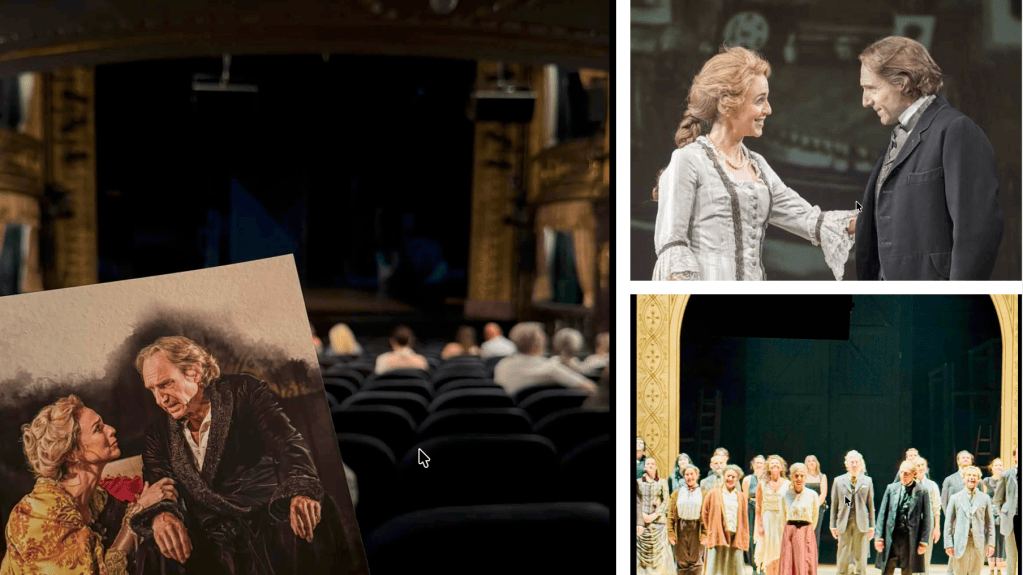
Ralph Fiennes shines as the Victorian actor-manager Henry Irving in David Hare’s new play Grace Pervades. I was especially glad to have caught it on the final day of its limited run at the Theatre Royal Haymarket.
The theatre itself feels like part of the experience. There is something fitting about watching a play about Victorian theatre, ambition, celebrity, artistic ego, and the fragile relationships behind public success in one of London’s historic West End houses.
Fiennes brings intensity, intelligence, and charisma to Irving—a man whose art and reputation seem inseparable from the demands he makes of the people around him. It is the kind of performance that does not need grand theatrical tricks.
David Hare’s writing gives the story its sharpness, but Fiennes gives it pulse. Watching him inhabit a figure from theatre history felt like watching several eras of British performance meet at once: Victorian stagecraft, contemporary writing, and an actor with the confidence to make both feel alive.
Third Stop: Jesus Christ, Superstar
Tim Rice and Andrew Lloyd Webber’s Jesus Christ Superstar remains beautiful.
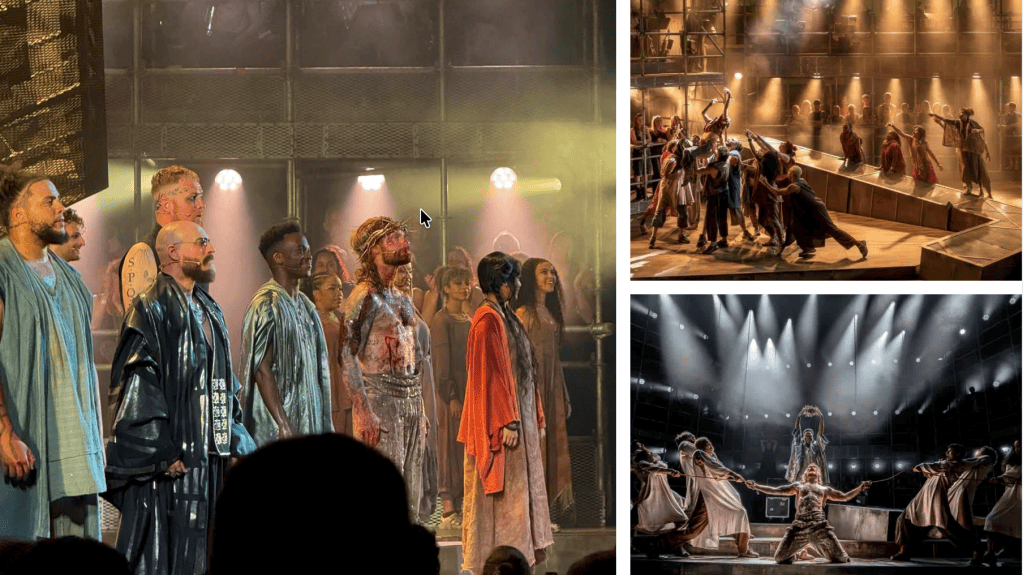
It is also remarkable how fresh it can feel, despite being more than half a century old. The score still has urgency, the music still carries real emotional weight, and the story—of faith, politics, power, fear, betrayal, and sacrifice—still has an undeniable pull.
What made this production especially joyful was its international cast. Seeing a Filipino actor play Annas and an Indonesian performer take on the role of Mary Magdalene was a genuine pleasure. There is something particularly moving about seeing artists from Southeast Asia on a major London stage, bringing their own presence and interpretation to a musical that has travelled across countries, generations, and cultures.
And then there was Sam Ryder as Jesus.
He was outstanding. His voice has range and power, of course, but it was the emotional clarity of his performance that stayed with me. Jesus can easily become an impossibly distant or overly solemn figure in a production like this. Ryder instead made him feel human: exhausted, vulnerable, conflicted, and overwhelmed by the events closing in around him.
I cannot imagine anyone much better in the role.
Final Stop: Sinatra, The Musical
Sinatra, The Musical had received mixed reviews, much of it focused on what some critics described as a thin storyline. Fair enough. The life of Frank Sinatra was enormous, complicated, messy, glamorous, and full of contradictions. Fitting it into a neat theatrical narrative is never going to be easy.
But honestly, who cares?
The show is full of the kind of music my father, Miguel, loves. That alone made it worth seeing.
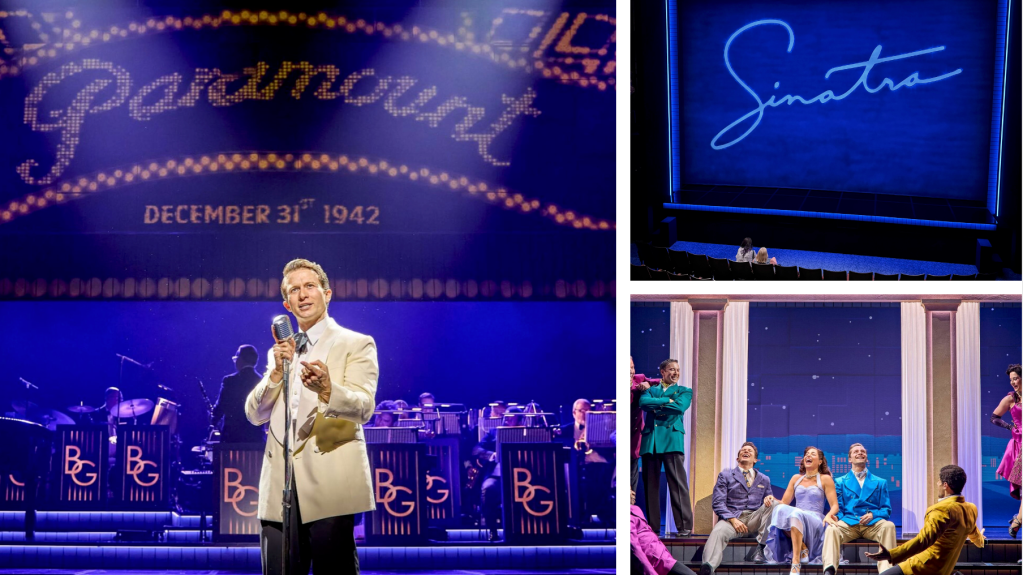
I managed to get a front-row Grand Circle seat at a bargain price, which made the experience even better. From up there, I had a clear view of the stage and the chance to take in the scale of the production without worrying about whether the storyline held together perfectly.
Joel Harper-Jackson dazzles as Frank Sinatra. He has the presence, polish, and vocal control needed to play someone whose voice is so deeply imprinted in popular culture. You do not want an imitation, exactly; you want an actor who can evoke the charisma and musicality of Sinatra while still making the performance his own. Harper-Jackson does that with confidence, especially when he belts that classic “My Way”.




Leave a comment