One of my favourite Australian concert pianist, Scott Davie once wrote:
Maybe that’s the reason that in several cities I visit, I always look for a gallery, a museum of art, or an artist’s workspace, just to inhale fresh acryllic on a canvas, or wander aimlessly across a halls and walls of colors and abstractions.
The Gallery by Sofitel Hotel Phokeethra
In this particular visit to Phnom Penh, I just had the urge to take a look at exhibitions. I heard that there was a Filipino artist that had his work showcased at the Sofitel Hotel gallery and so I went hastily and unplanned. That Filipino is Michael Santiago, a storyboard advertising artist that has lived in Cambodia for more than two decades. The exhibit, entitled “Eat, Pray, Love”, is his love letter to the country’s everyday scenes, immortalised in bright watercolor paintings featuring characters and their wares. A few images are available below – and you can very well relate to the montage.
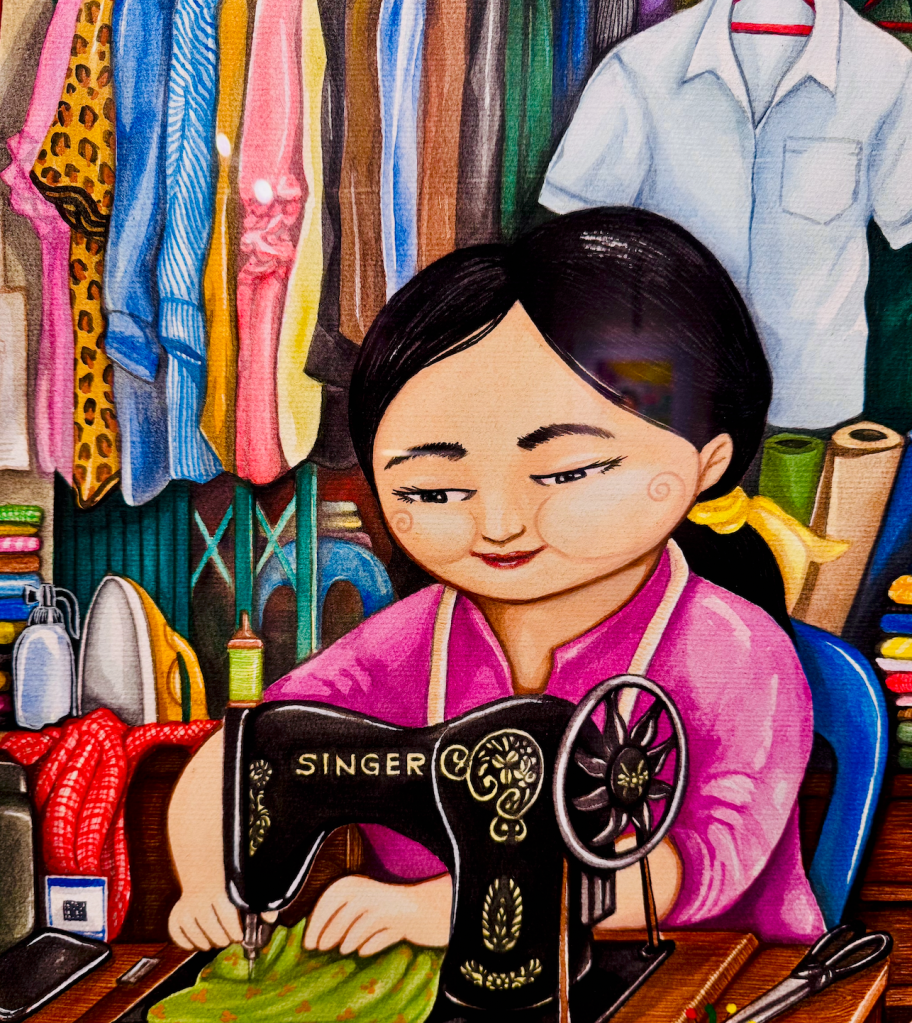
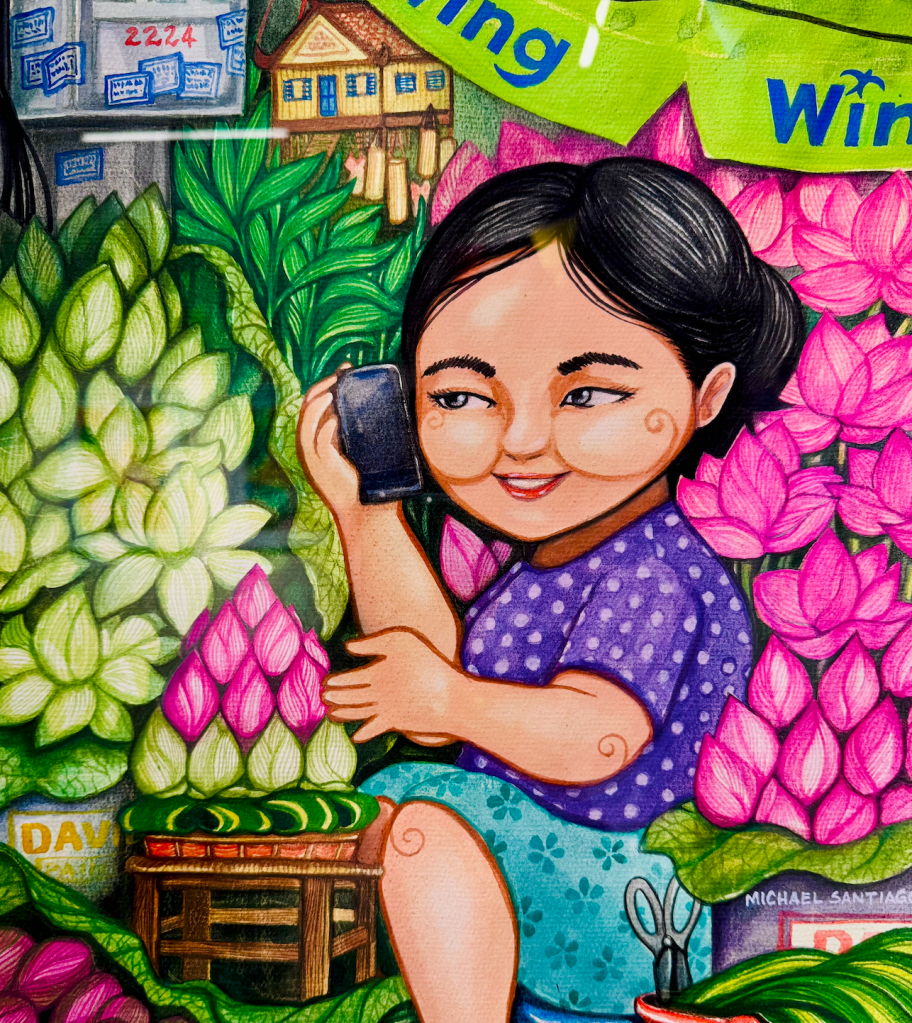
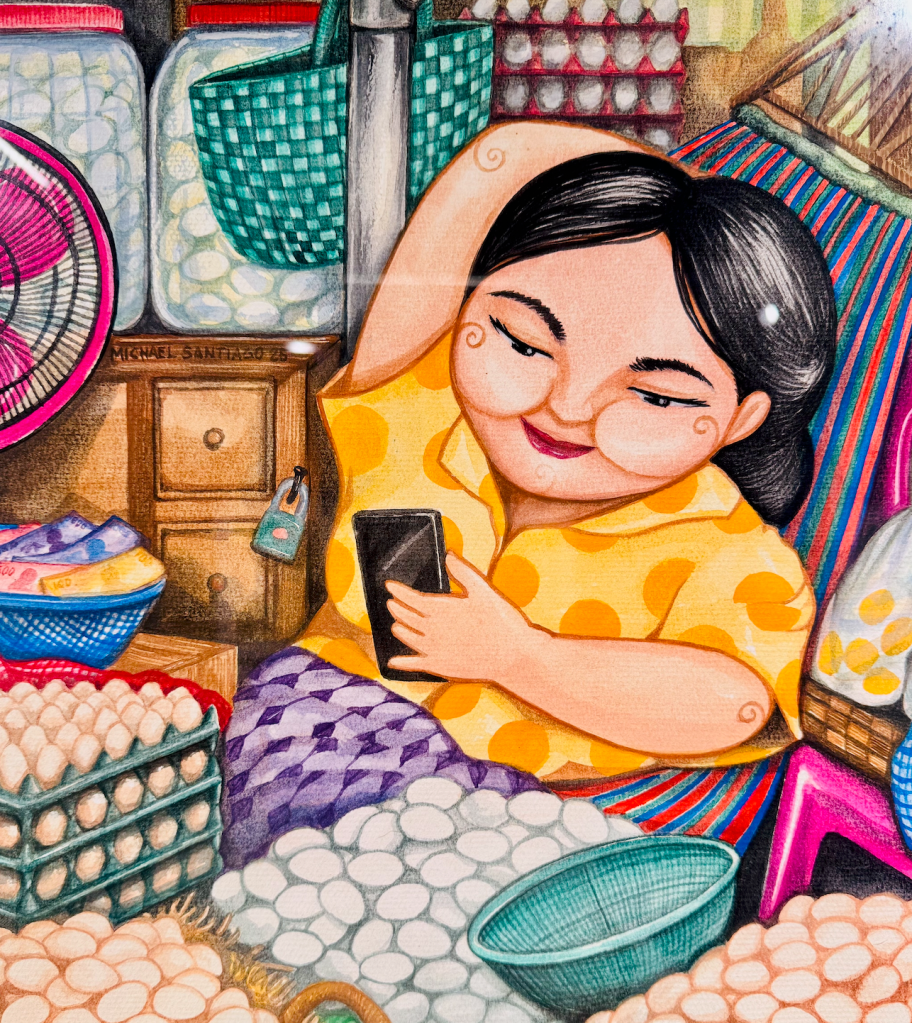
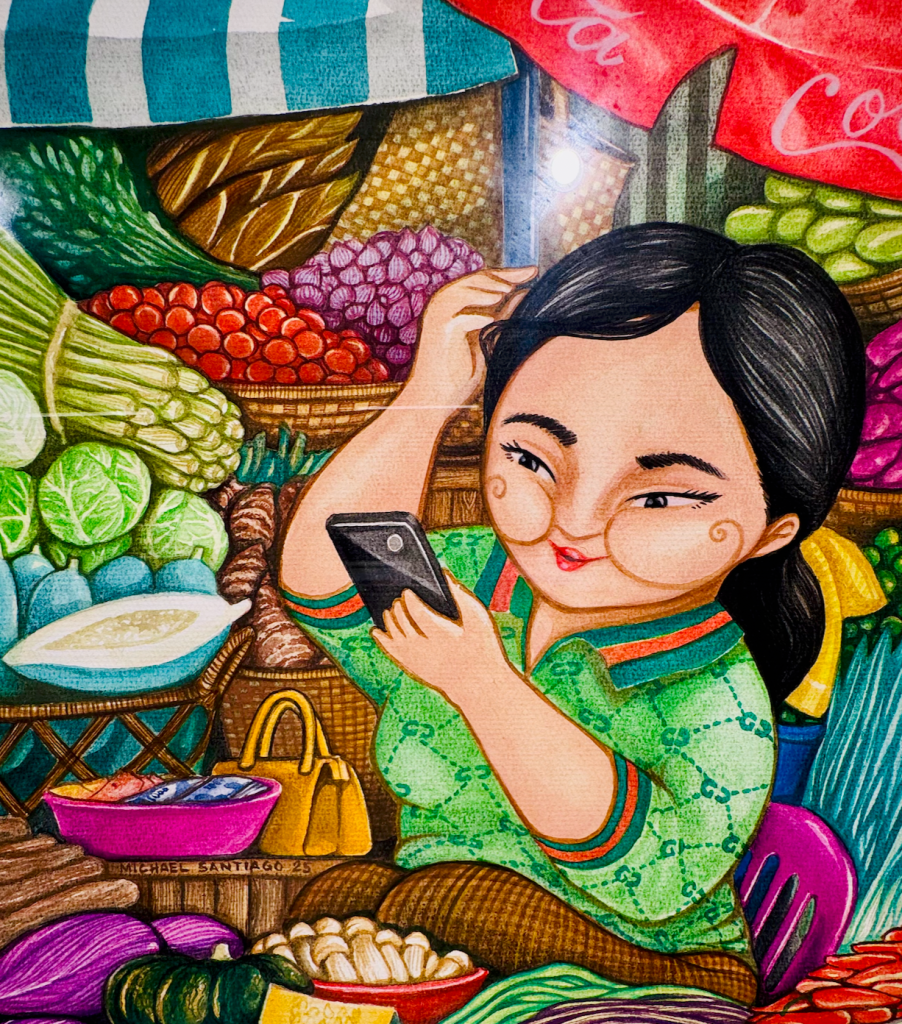
What made these paintings I featured here peculiar, is the presence of the ubiquitous mobile phone – the tool of the present (and maybe the future) alongside various muses, selling various products (or services). The old singer sewing machine is also there – my mother had one – and it seems like a Filipinisation of the artform, though I know singer sewing machines are also available in Cambodia and elsewhere in the world.
And indeed Scott Davie here is right – my interpretation of art is different from others, and even different from the artist, hence, the lack of certainty. This lack of certainty makes an art piece the subject of discussion, of contestation, fueled of course by individual interpretation reflective of one’s upbringing, values, experiences.
I have listened to an interview of Julie Thai, founder of The Gallerist, in one of the Apple podcasts on art and creativity that I have always wanted to visit the gallery she established, situated along Phnom Penh’s street 240, famous for cafes, creative stores, and fair-trade fashion houses. I have known that the curation is purposeful, and strives to highlight the works of emerging Cambodian artists, and so I went one morning, just before lunch.
As expected, the gallery is beautiful and curated well. I have a few favourites that I would like to highlight below:
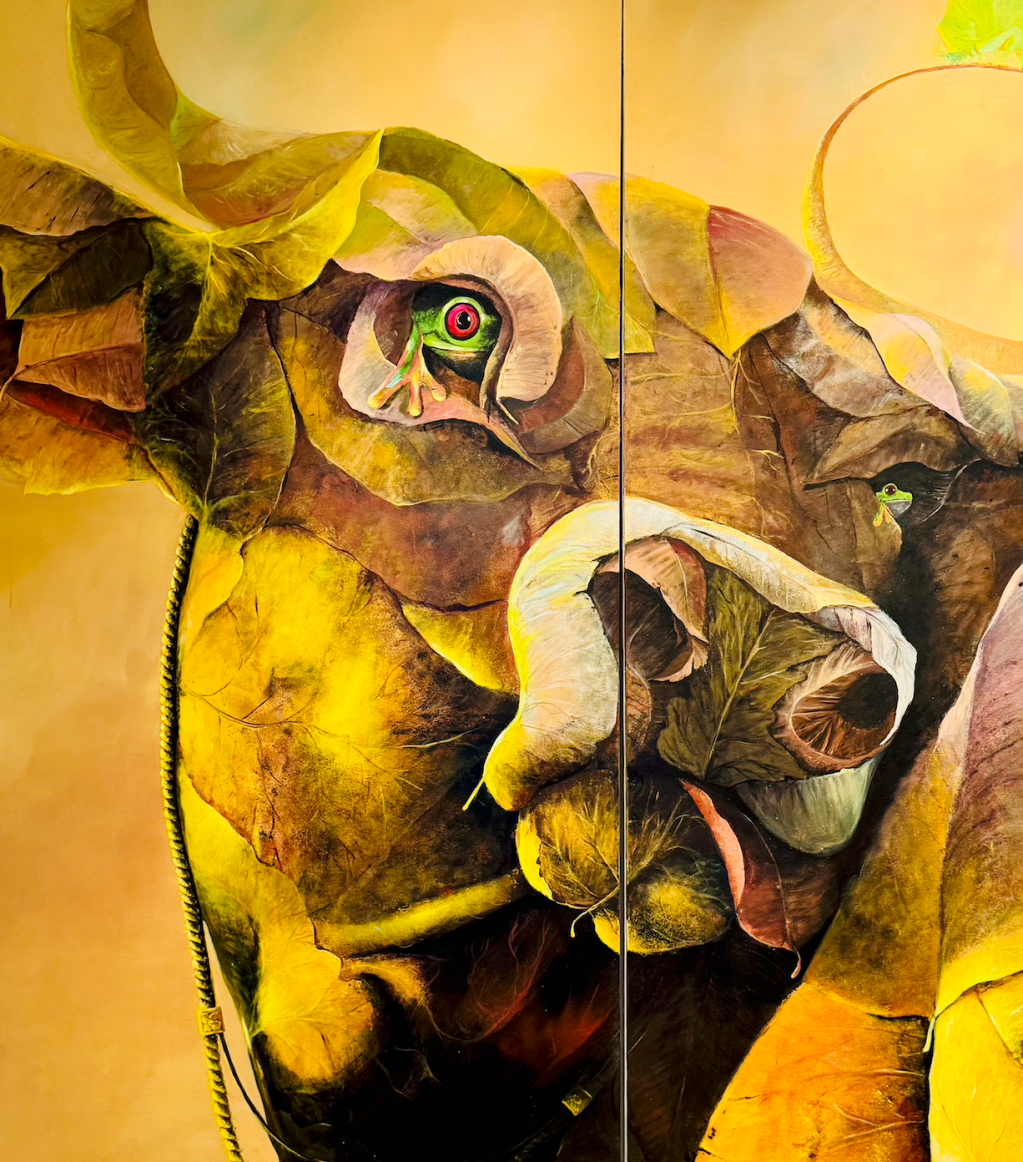
Love by Nout Daro, oil on canvas
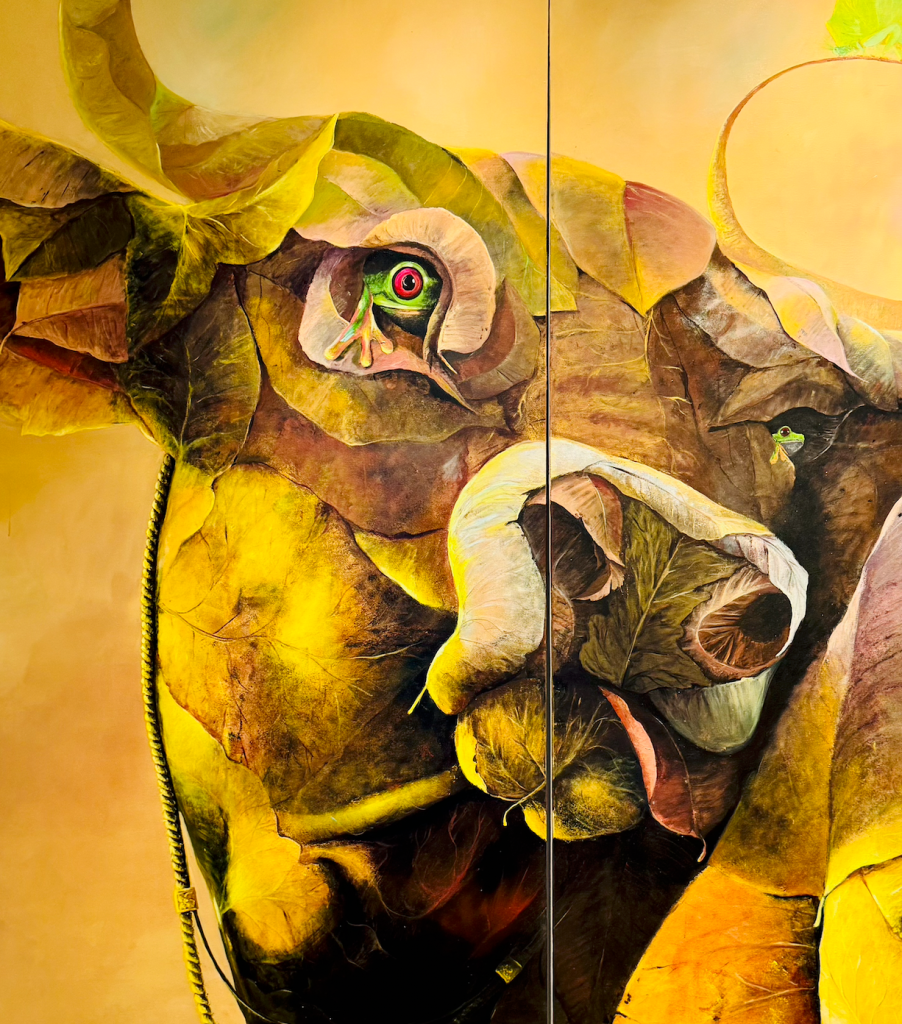
The picture above is just a portion (well, my favourite) of the three-part panel. The imagination here is profound and the creativity is boundless. I will not attempt to say something more, but you can just take a look at the picture and you will find yourself asking questions, and reflecting on life’s temperamental fleetingness.
Nout Daro is Cambodia’s present and future offering. I spoke to Julie when I visited her gallery, and she said the artist, still very young, has still a very long way to go and she is excited as to what he will be able to create next. Julie told me his latest work is on exhibit at Raffles Hotel, but the restaurant, where the exhibit was housed, was still closed when I came. Maybe next time.
Young, White, Golden, by Nou Sary, oil on canvas
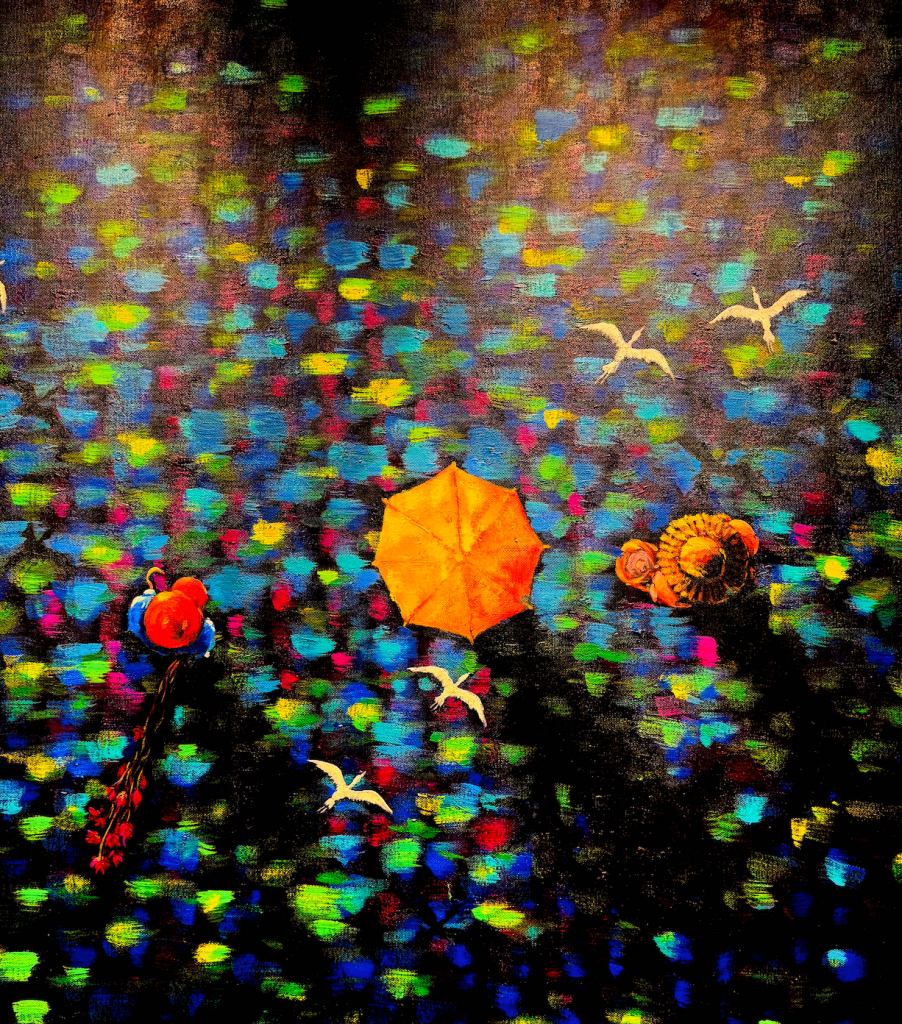
The picture above does not do justice to the beauty of the work. This is part of a series of Nou Sary‘s work, famous international artist who was also once a restaurant chef.
The artist pays tribute to the rural farming landscapes and actors across the country. The rich and vibrant colours, against a black backdrop, communicates, at least to me, the lack of importance society has on the countless farmers and rural communities that put food on our tables. In Nou Sary’s canvas, the figures emerge from the blackness, from oblivion, from nothingness. and his calculated strokes obrings them to the fore, and brings them not only representation, but life.
Harmony, by Chhim Sothy, oil on canvas
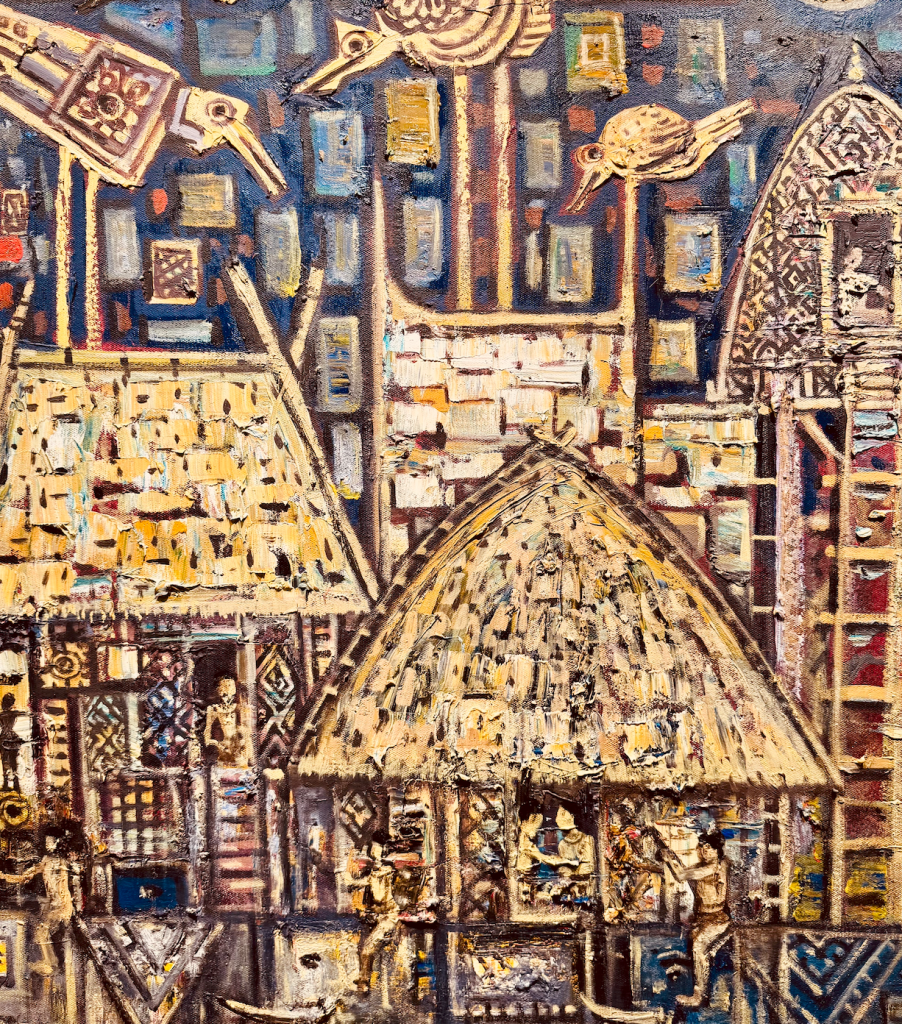
The work above is by Chhim Sothy, acclaimed Cambodian painter and sculptor. The minute details, enlarged above through a photograph of one of the intricate hut houses that I am particularly interested in, because of how it blends familial practices and local architectural design, are impressive in terms of depicting local culture and way of life.
So there, I have finished this essay. I started it with Scott Davie’s quote, and I will end it with another one. In an interview about Rachmaninoff’s concerto, he said:
“To be a good musician, you have to be knowledgeable about what you are playing.”
I think this applies to the artists in this post as well. It is quite clear that Michael Santiago, Nuot Daro, Nou Sary, and Chhim Sothy all know what they would like to communicate through their paintings. We are all gifted with the space to find the meanings on our own.


Leave a comment