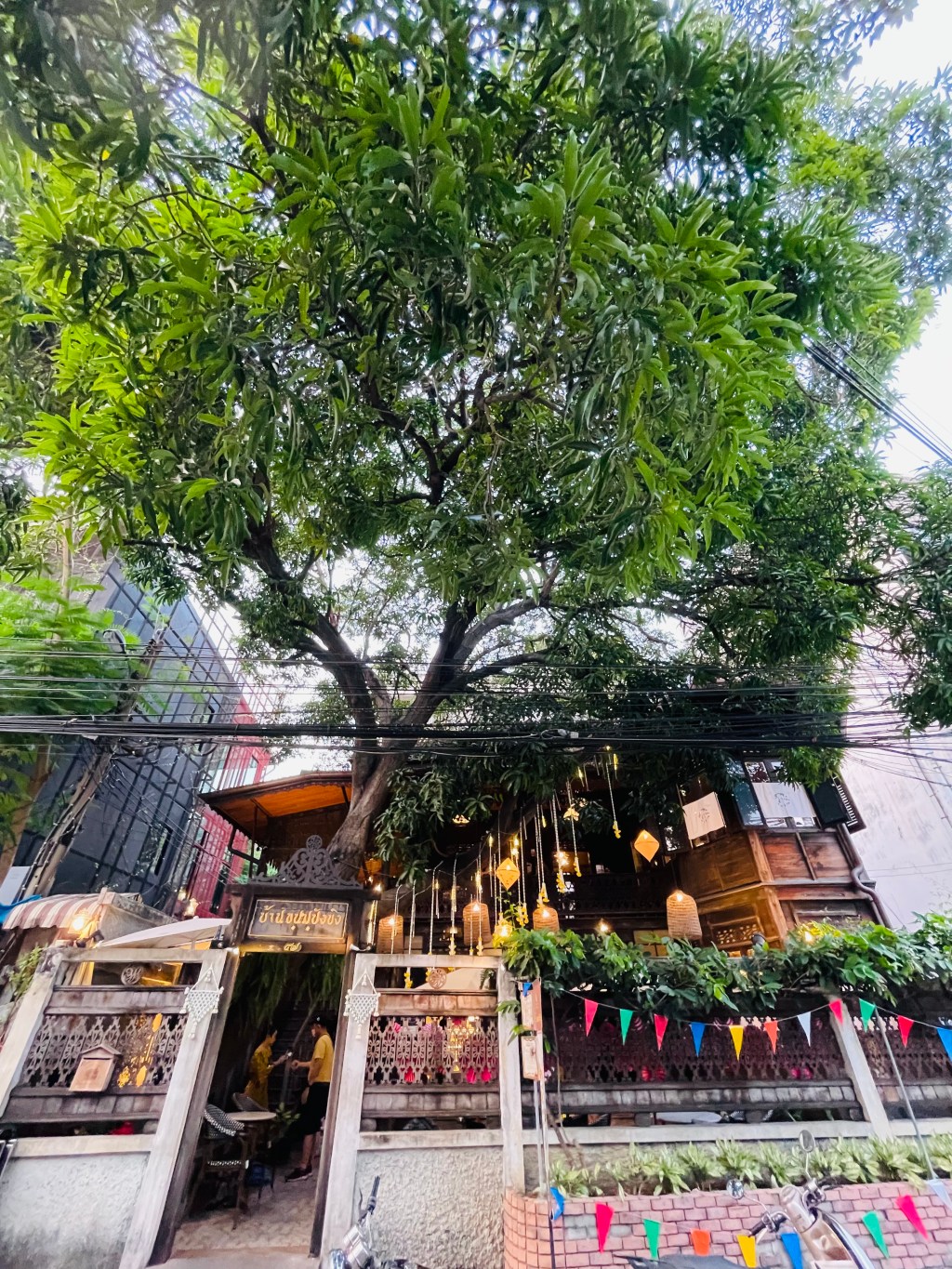
No one visits Thailand without trying its basic staple – mango sticky rice – that has recently been made into a flavour of a locally-produced candy. On one of my afternoon walks, I chanced upon a place called The Gingerbread House near Wat Suthat Thepwararam, a landmark Buddhist temple in Bangkok. When I asked the server what’s the main famous dish on their menu that’s frequented by tourists, she said, “Mango Sticky Rice”. Surprise, surprise! Mango sticky rick at The Gingerbread House!
The picture below though says a lot why it is famous. The presentation is just elaborate and beautiful.
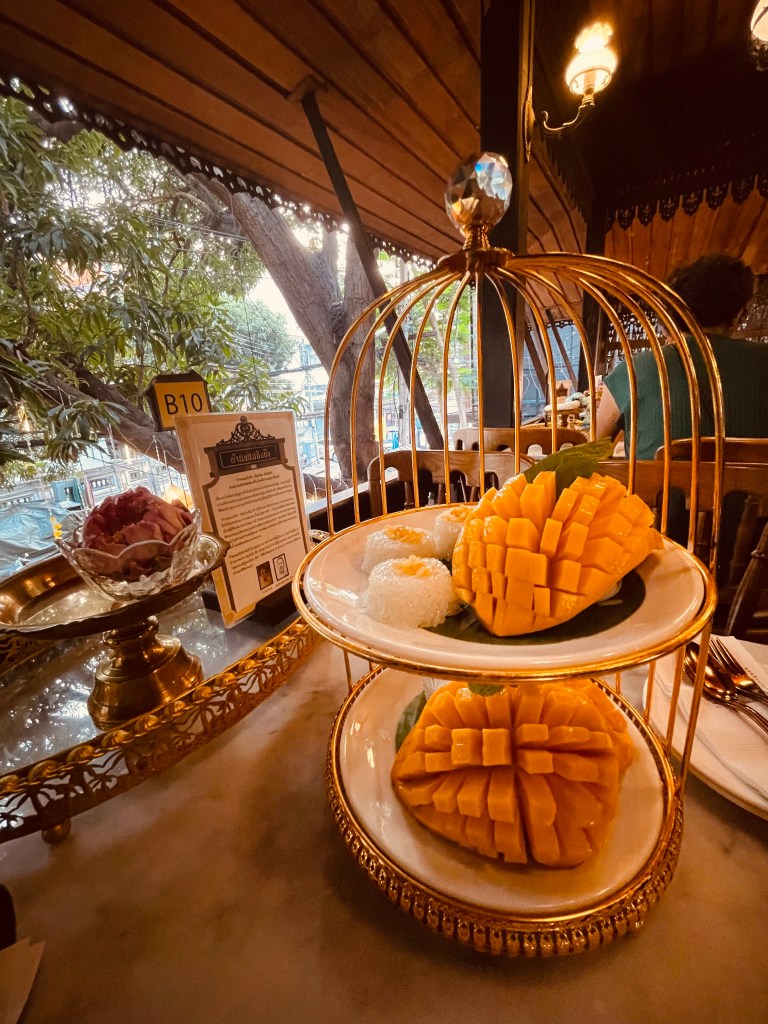
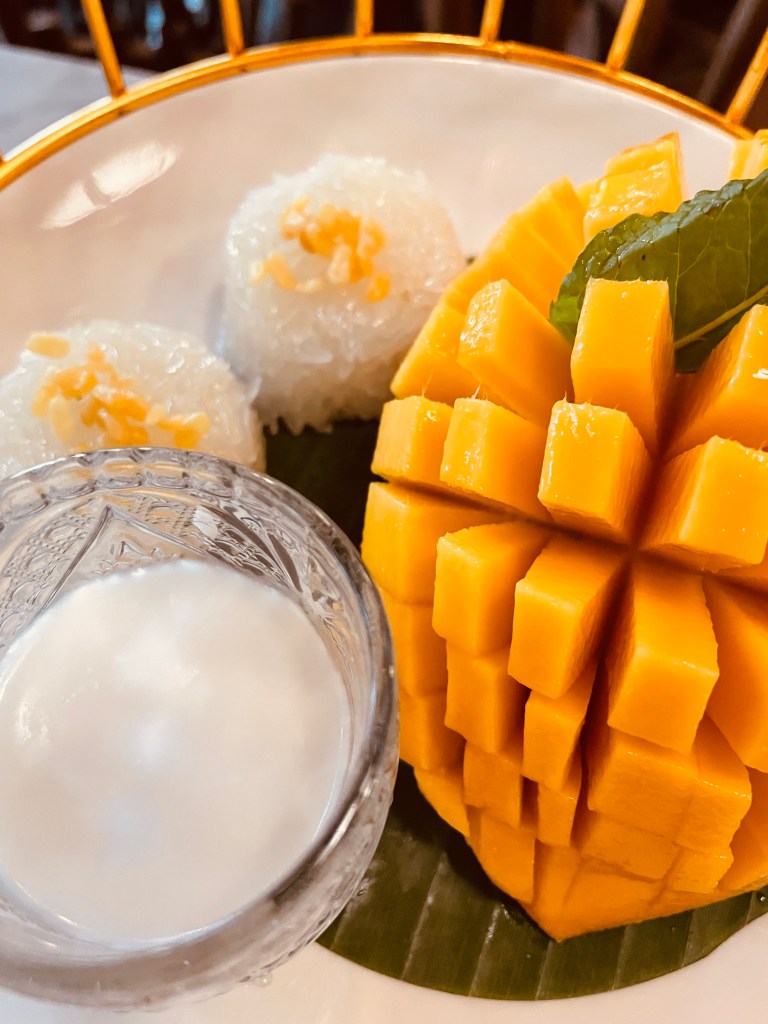
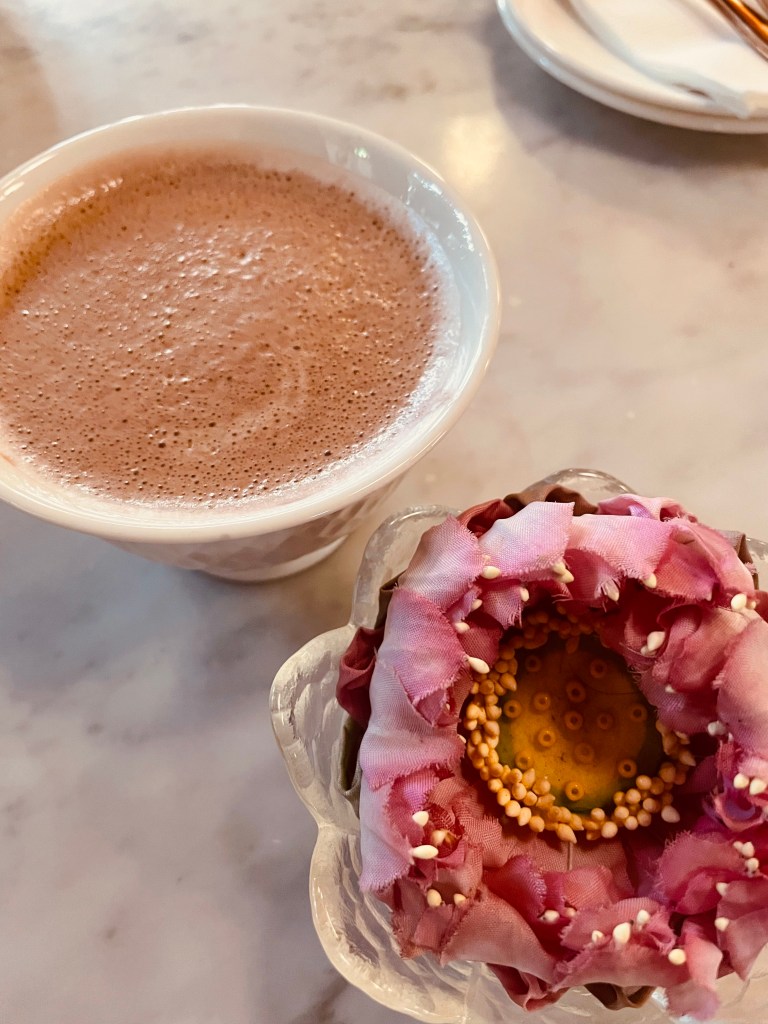
The Filipino in me made me order it with hot chocolate despite the Bangkok heat. But surely, isn’t that a beautiful plating, complete with a lotus flower? Does it taste good? Yes. Is it any different from the ones I get from the street? Probably in terms of the quality of the rice and the mango, but after eating several in this country over the last three years, the difference is just a tiny fraction.
As you might have guessed, I love old houses and repurposed places. The GingerBread House does not disappoint. See the pictures of the place below.
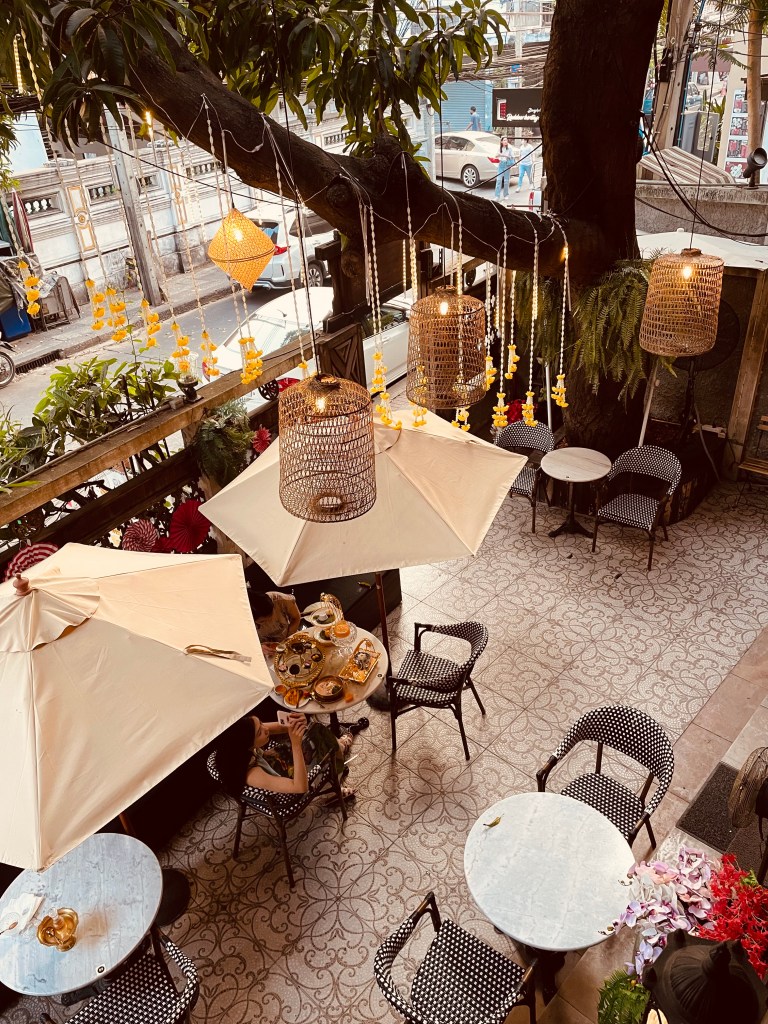
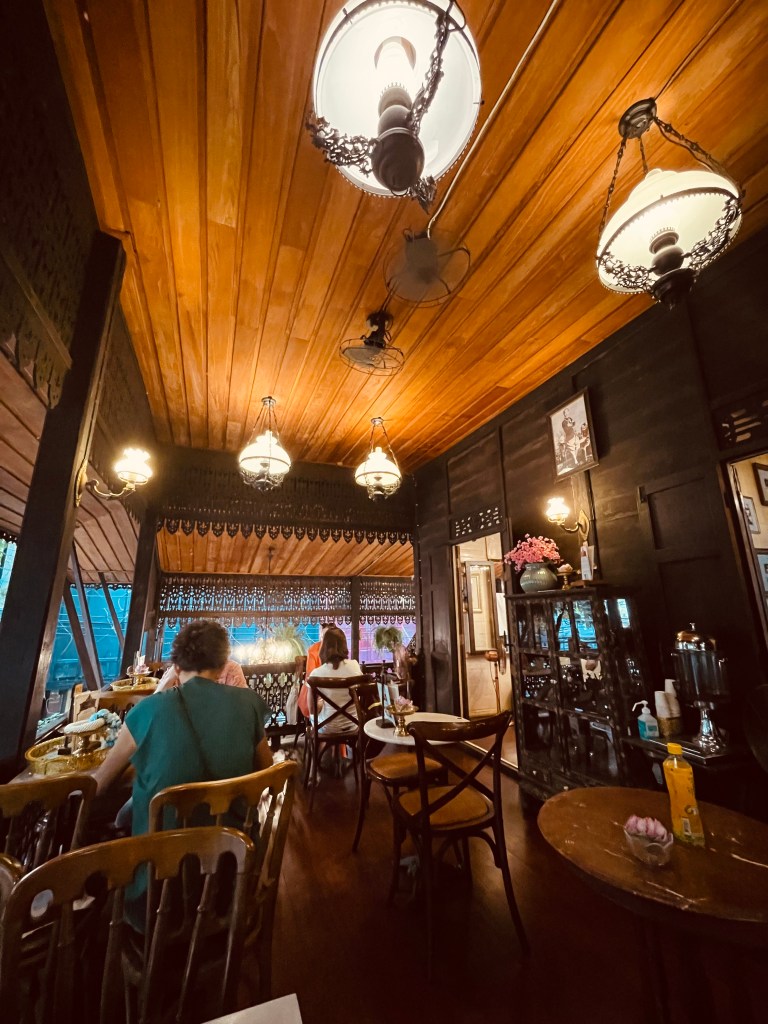
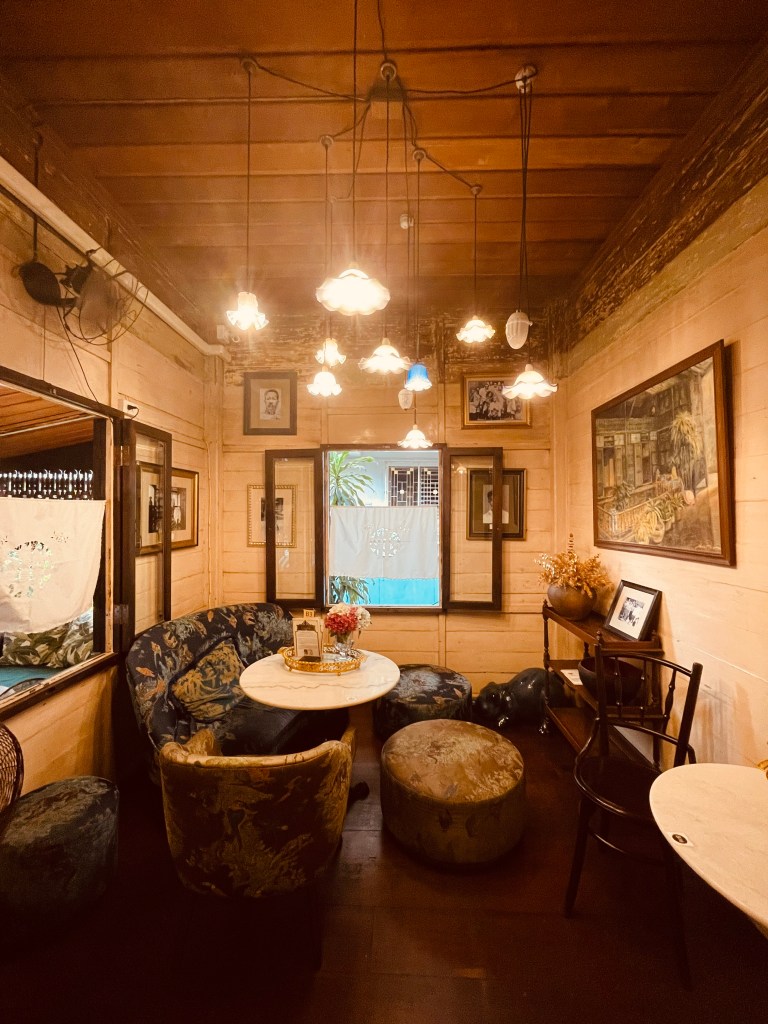
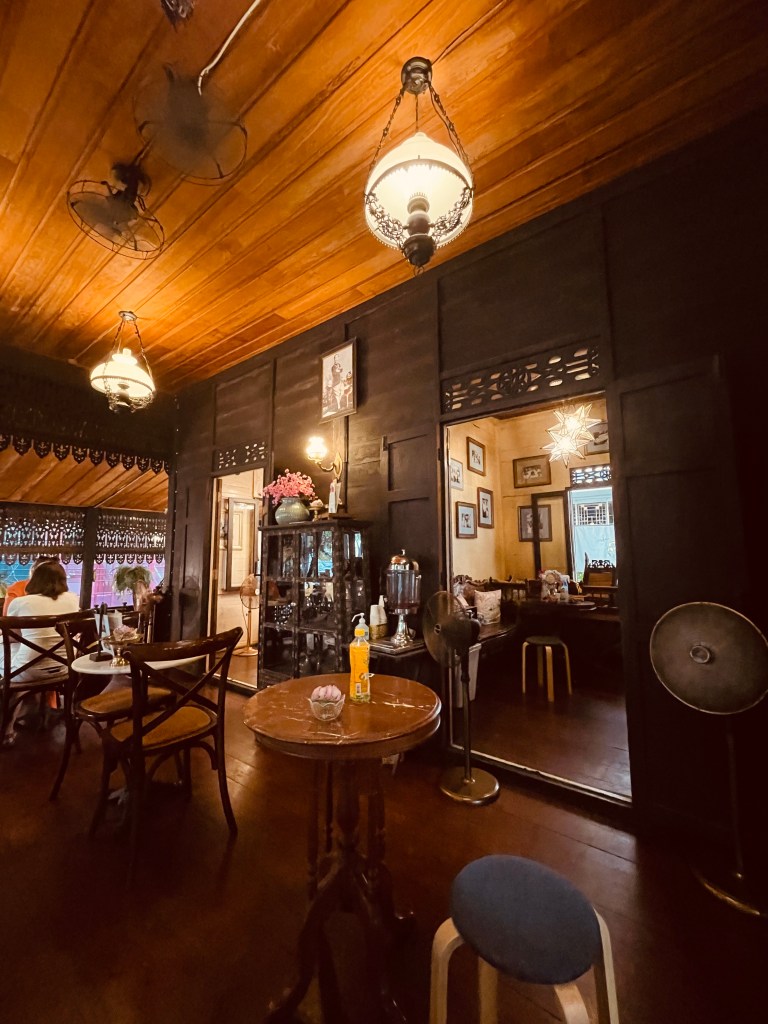

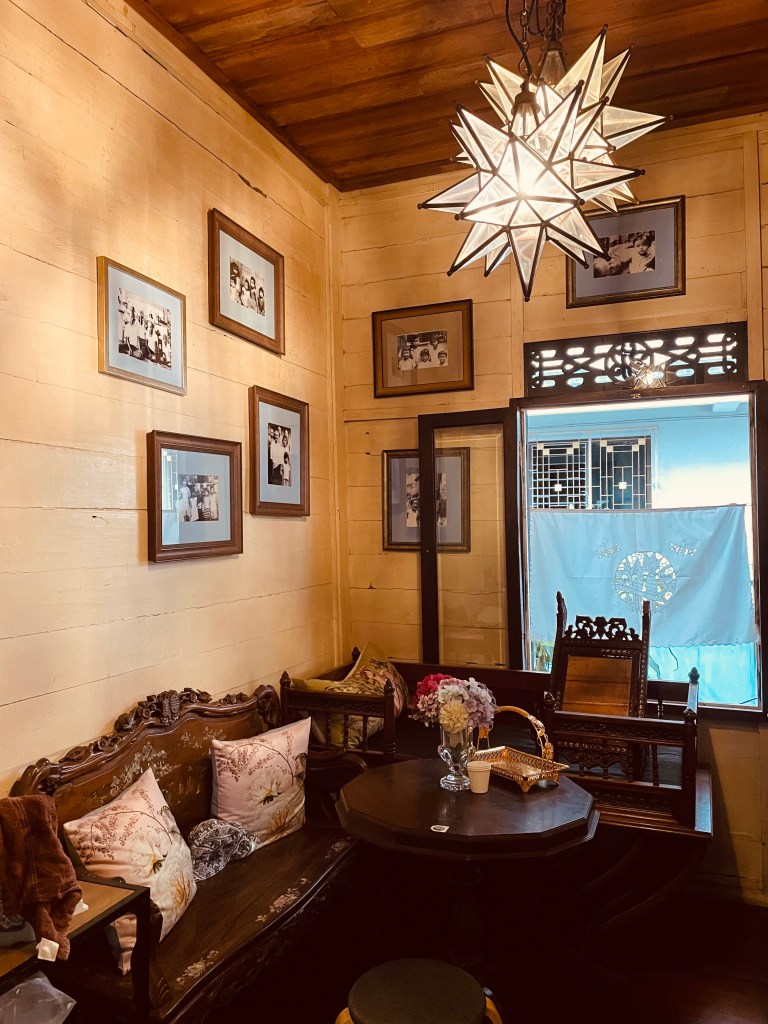
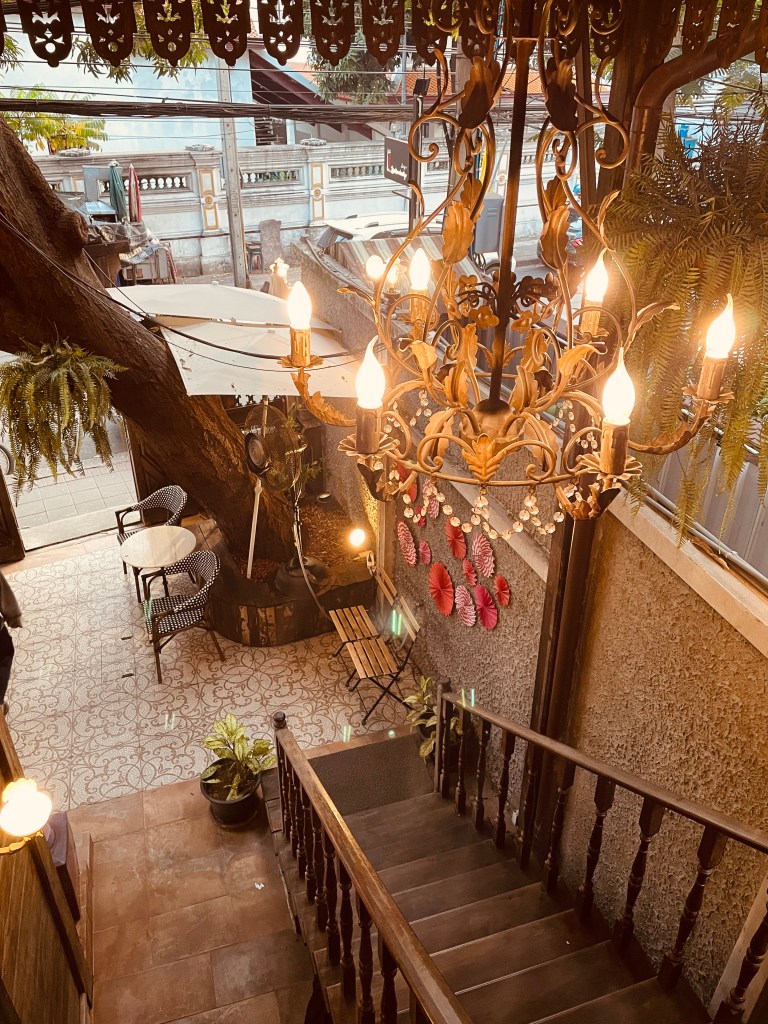
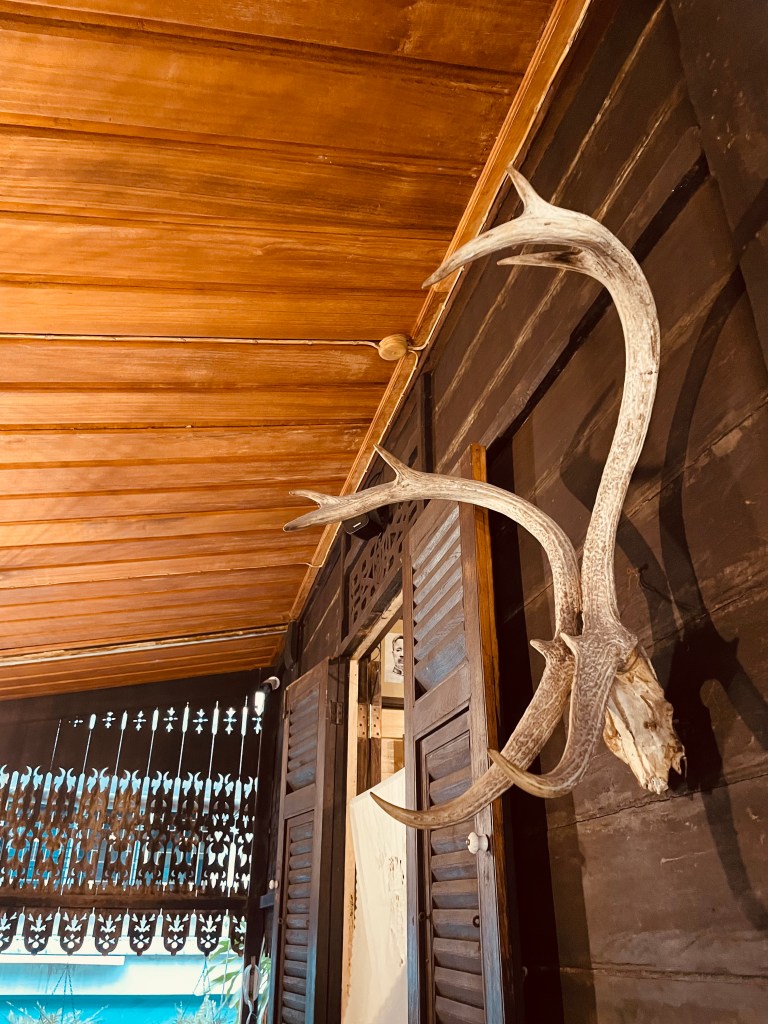
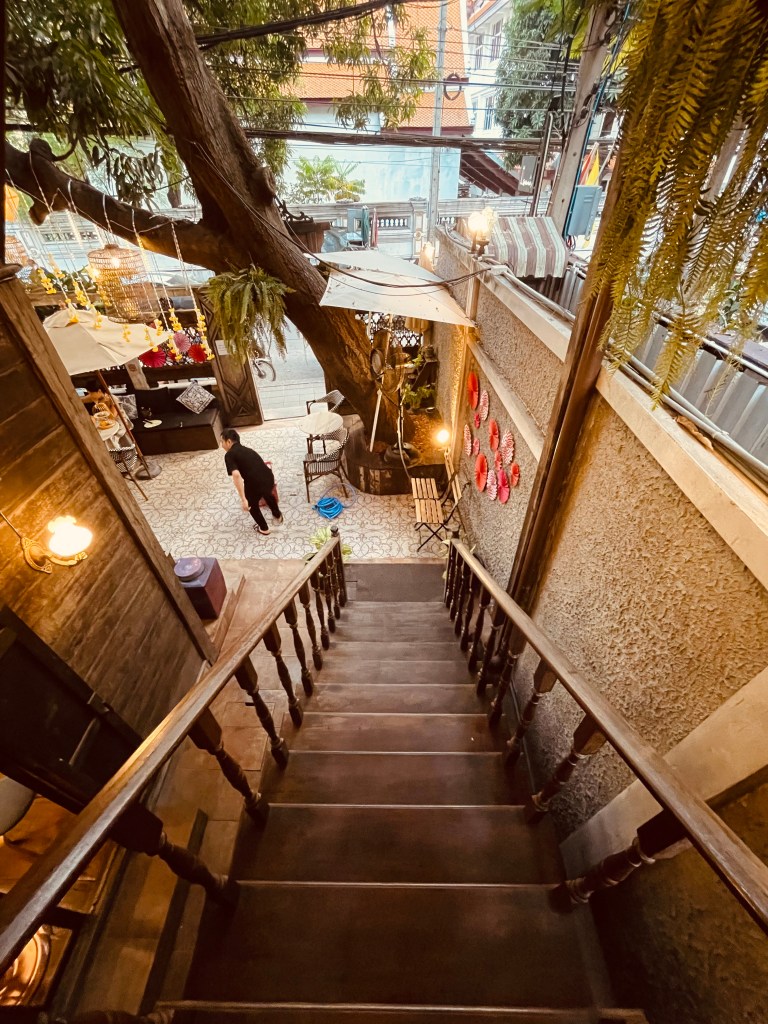
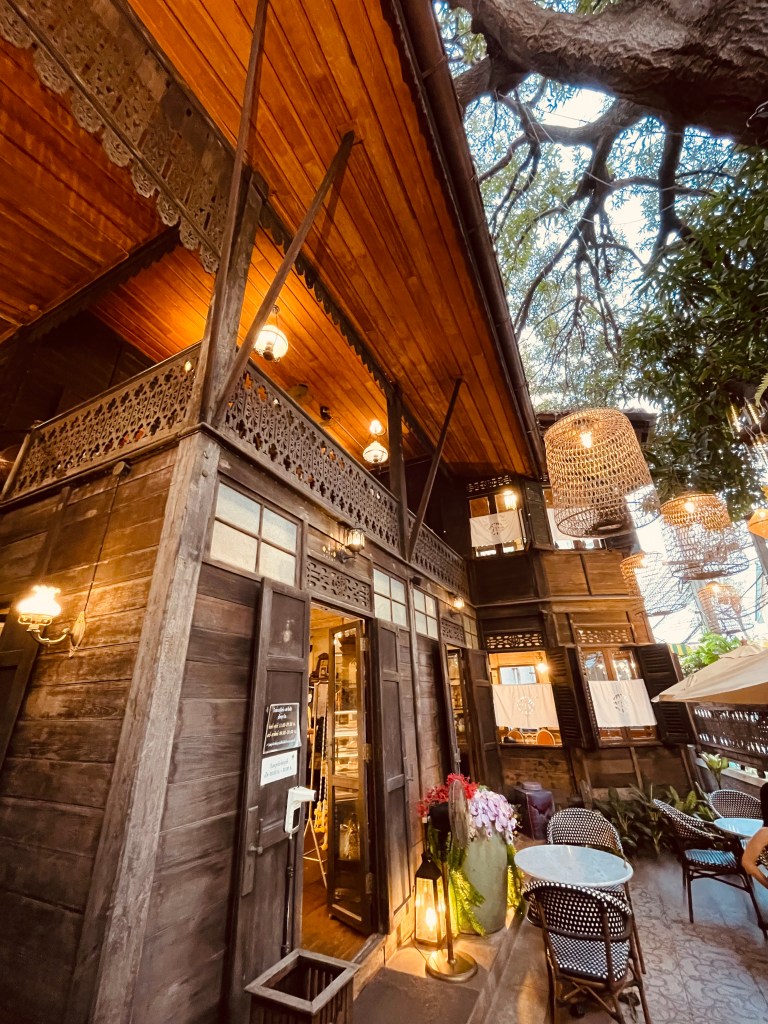
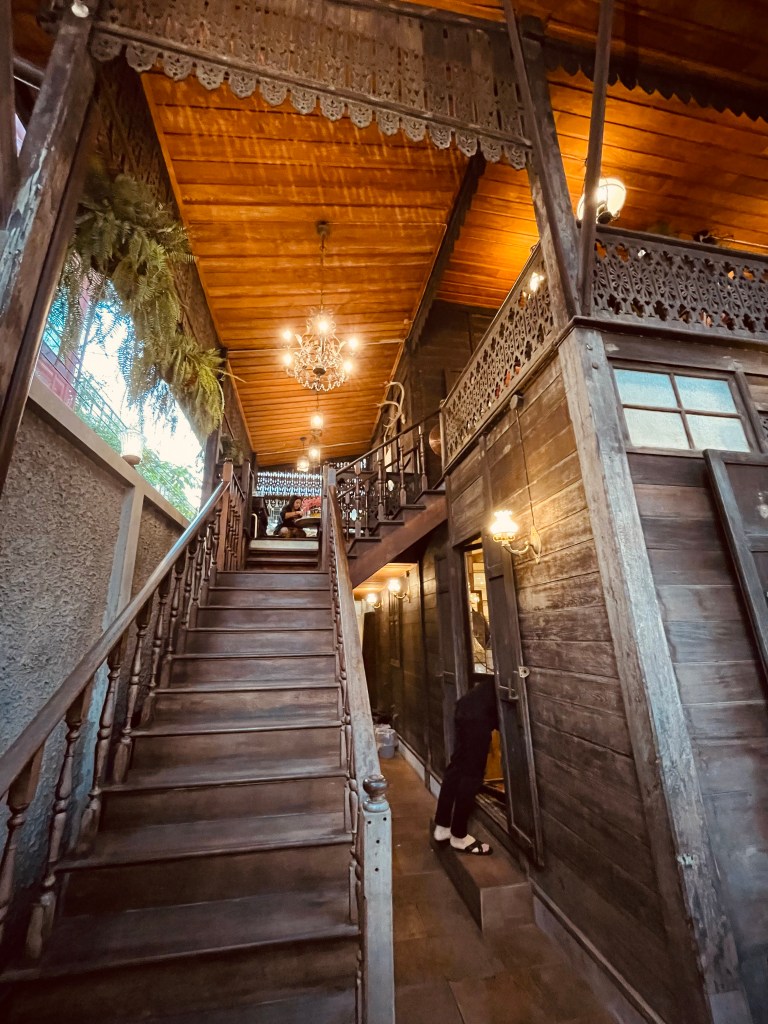
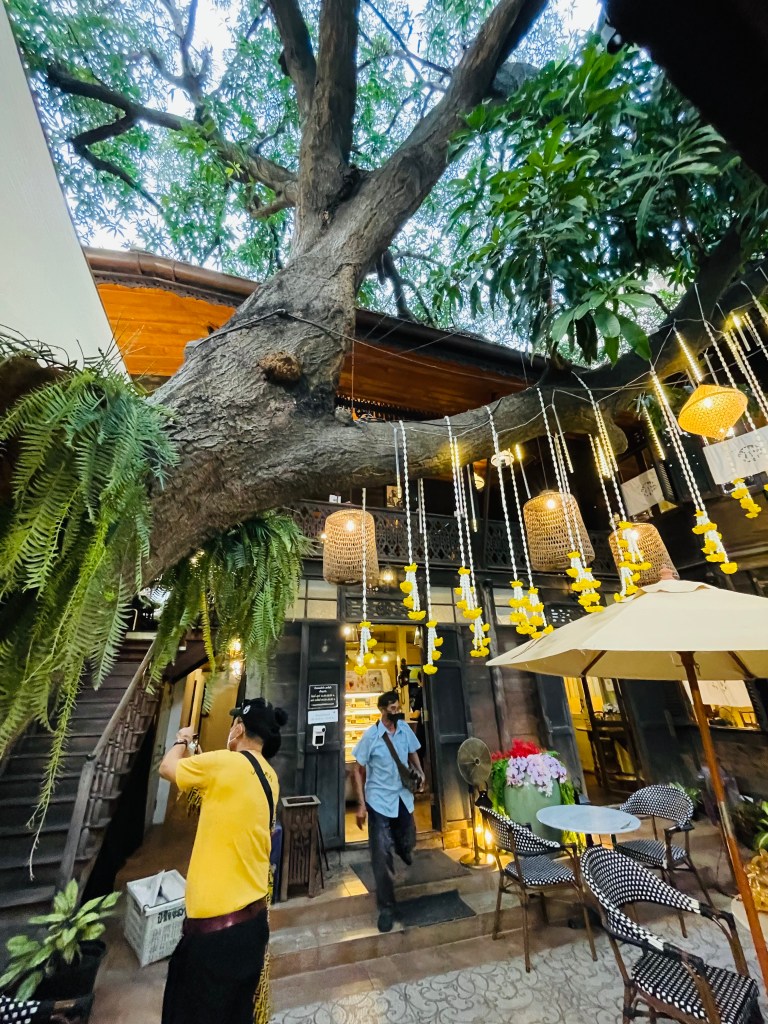
But you might ask? Why is this house called The Gingerbread House? A quick Google search will lead you to the Siam Rat blog, where the author says:
In the mid-nineteenth century growing European influence in Siam resulted in a new style of architecture for wealthy families. Using traditional materials such as teak, houses started to be built following European style floor plans which called for formal reception rooms and dining rooms. The distinguishing characteristic was the use of highly ornate (and highly expensive) fretwork to decorate window frames, balconies and roof gables.
At this time gingerbread was a popular type of cake in Europe and using it to make houses elaborately decorated with icing, fruit and even gold leaf had became a Christmas tradition. In 1812 the Brothers Grimm had published their tale of Hansel & Gretel in which the two children had discovered a full sized gingerbread house in the woods. This famous tale helped increase the popularity of gingerbread houses.
So this new style of house appearing in Siam with its ornate fretwork decoration soon became nicknamed “Gingerbread Houses” and this style remained popular for several decades.
In the twentieth century the costly gingerbread style fell out of fashion and many of the old houses fell into disrepair and were torn down. But some have survived and now in the twenty-first century these old buildings are finding a renewed appreciation. Many splendid examples are being restored and opened to the public.
So there you go.
The Gingerbread House does not have anything to do with the mango sticky rice I ate. It’s the architecture, folks.
 Everything Random
Leave a comment